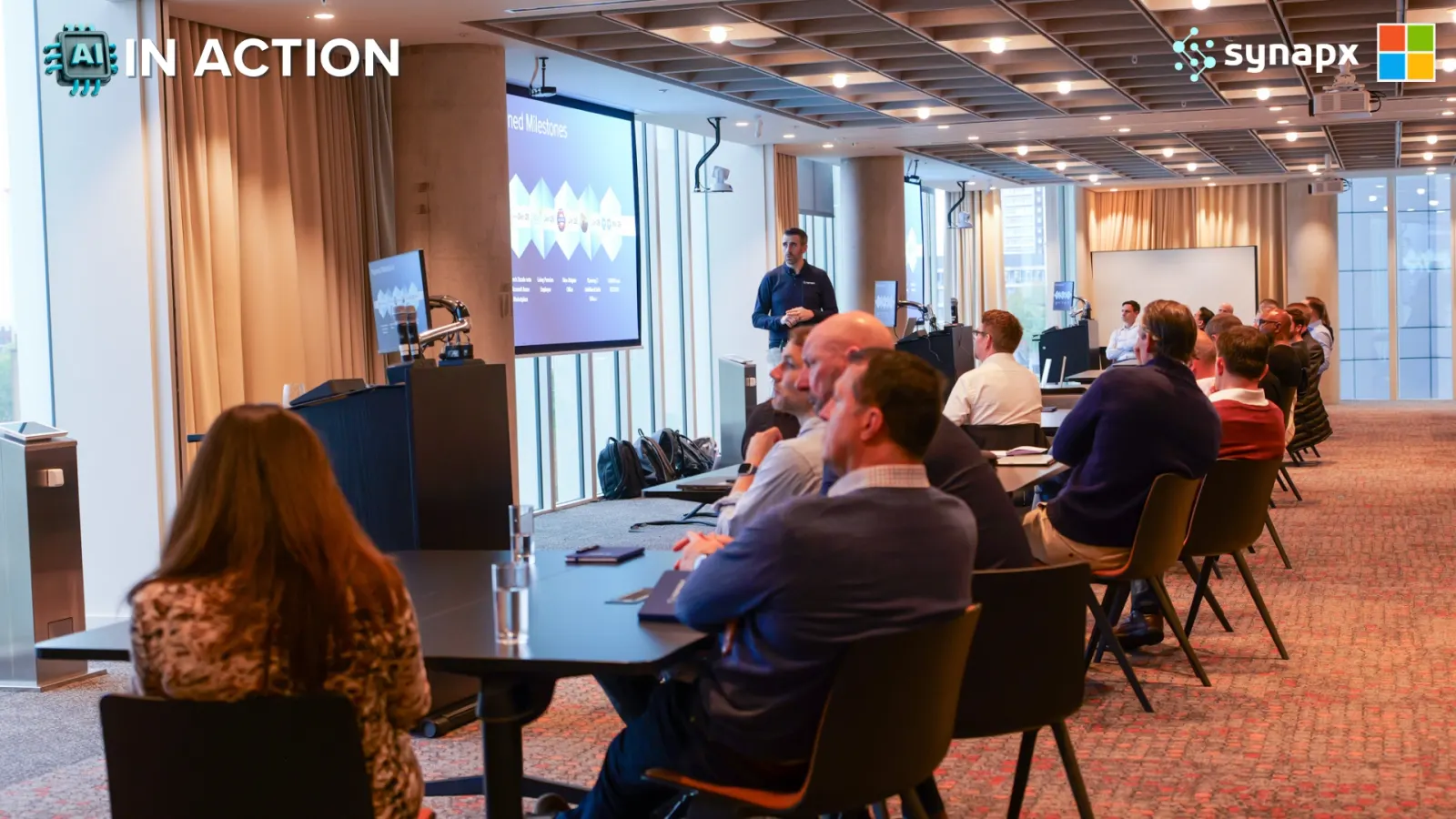
Last month, Synapx hosted AI in Action, a day of discussion, demos and forward-looking conversations on how AI is changing the way we work. Microsoft ecosystem experts, industry leaders and forward-thinking business professionals all shared one belief: AI isn't just another tool — it's becoming a true collaborator.
Across sessions and showcases, attendees explored Microsoft's newest Copilot advancements, intelligent agents and multi-agent orchestration, seeing firsthand how these technologies are already transforming productivity, decision-making and creativity. The message was clear: AI is no longer about automation; it's about augmentation.
From Wi-Fi Otters to Generative Breakthroughs
Craig Bird from iwantmore.ai had the keynote spot. He opened with Ethan Mollick's "The Recent History of AI in 32 Otters" — a timeline that began with the prompt "otter on a plane using Wi-Fi." Between 2021 and 2025 those early blurry blobs of fur evolved into photo-realistic otters and then into fully animated, voice-synced video scenes.
Beyond the laughs, Craig made a serious point: AI's creative maturity is accelerating at an astonishing rate. The gap between proprietary and open-weight models is shrinking, and businesses now have access to generative tools that rival enterprise-grade systems.
From Assistant to Autonomous Partner
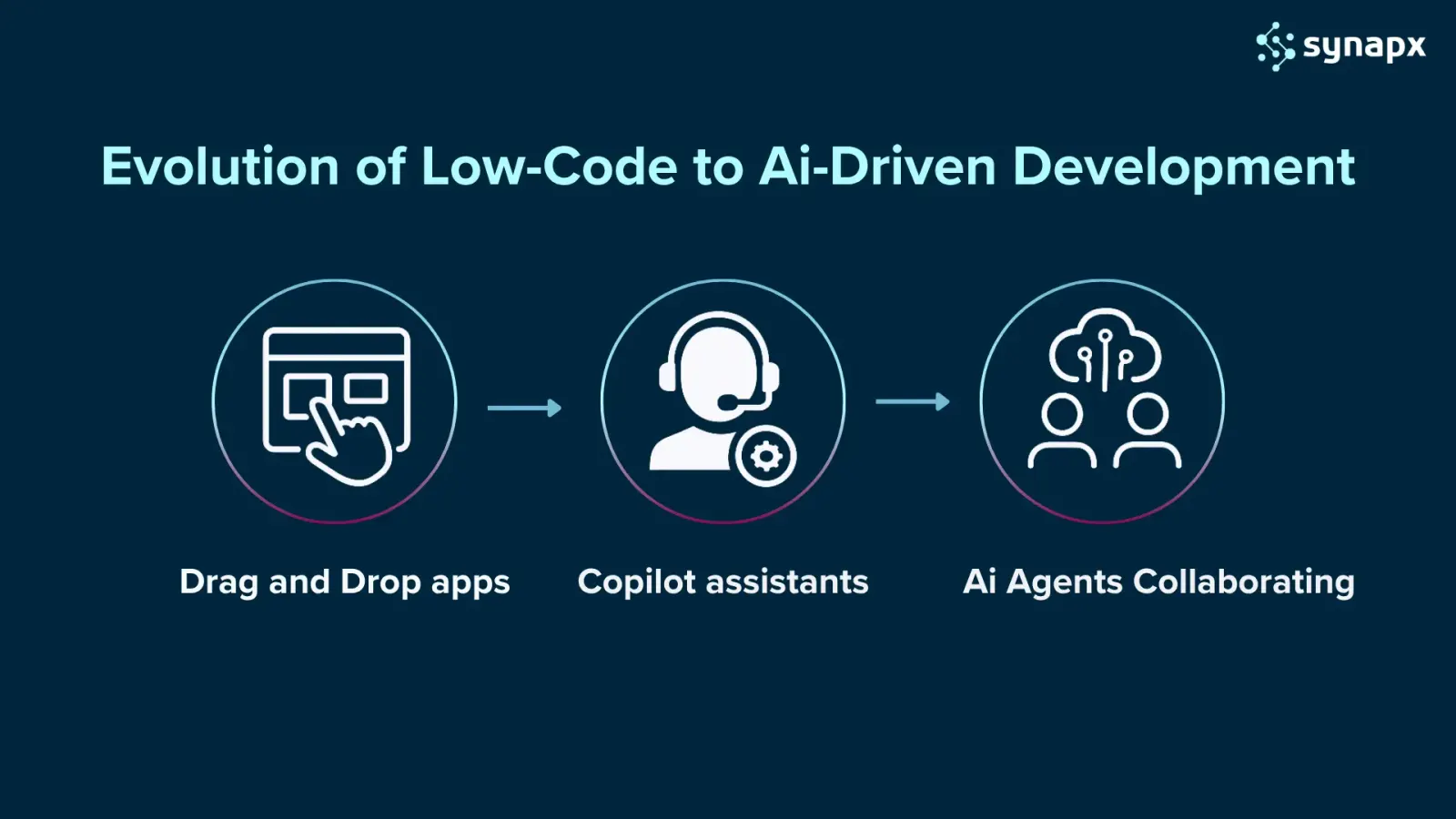
Craig unpacked the three phases of AI adoption:
- Phase 1 — Assistant. AI helps with repetitive tasks, drafting content, summarising data.
- Phase 2 — Digital colleague. AI executes specific workflows under human guidance.
- Phase 3 — Autonomous partner. AI runs processes end-to-end while humans set goals and step in when needed.
The takeaway: AI will not replace people; it will reshape roles and multiply capability.
Inside the AI Ecosystem
Damien Bird from Microsoft demystified the "TLA maze" — MCP, CUA and A2A — showing how these components work together through an Orchestrator that coordinates communication between multiple agents and systems. Microsoft's AI ecosystem is evolving from individual tools into a connected web of intelligent agents.
Governance, Fabric and Low-Code AI in Practice
Narayan Solanki led a session on responsible AI governance, emphasising that innovation must align with transparency, ethics and accountability. Andy Cutler then showcased how Microsoft Fabric unites AI capabilities across the data stack — from ingestion to analytics to collaboration.
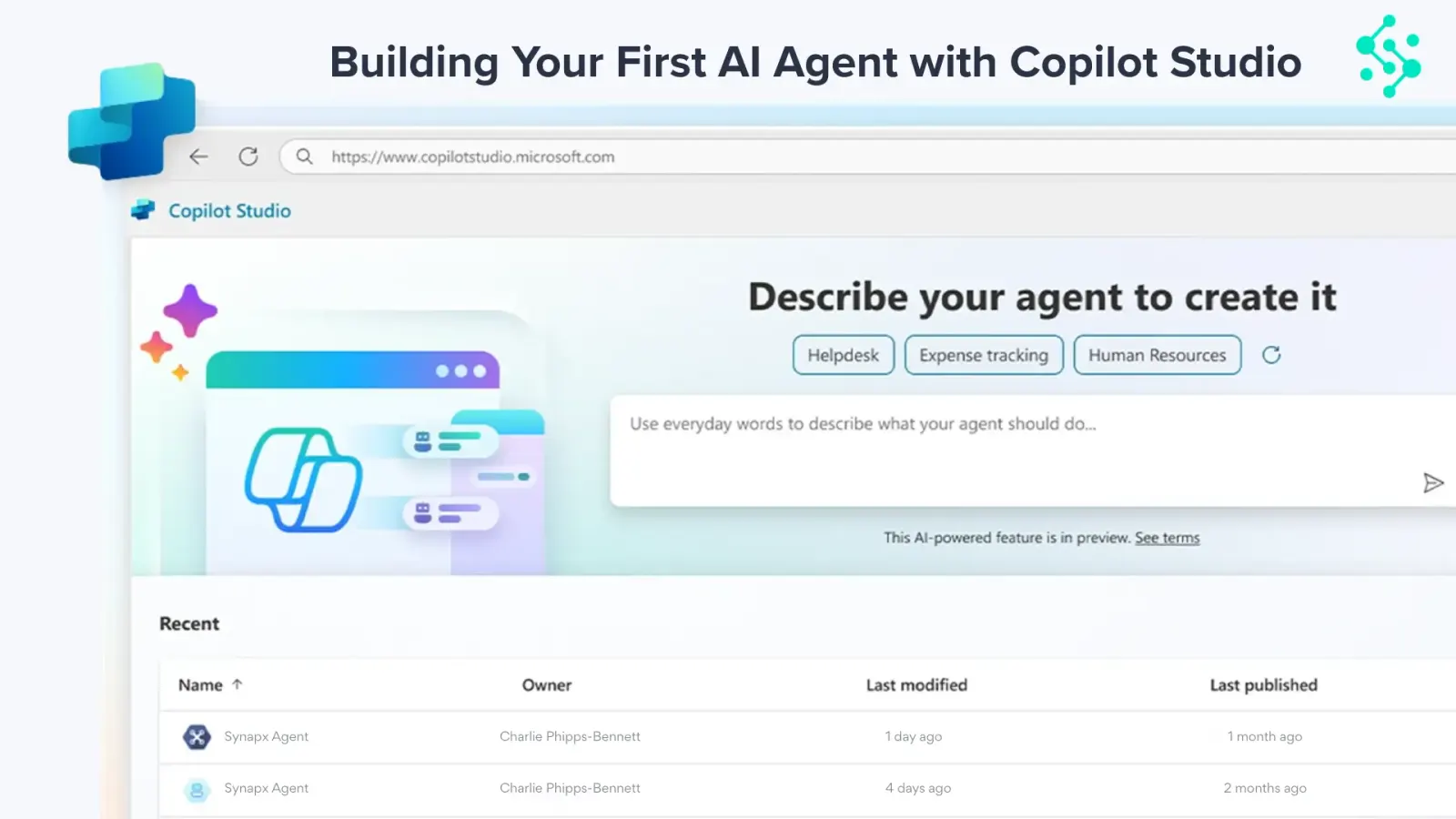
Finally, Charlie Phipps-Bennett closed with a live demonstration of document extraction built on low-code AI, showing how AI Builder and Copilot Studio can turn messy incoming documents into structured data in minutes, not days.
The Takeaway
AI in Action showed that the future of work isn't about replacing humans with machines — it's about pairing human judgement with tireless digital colleagues. Organisations that lean into that partnership are the ones defining what comes next.